

_front%20(1)-250x250.png "Melatonin Powder (MEASURING SPOON NOT INCLUDED)")


_front%20(1)-250x250.png "5-Hydroxytryptophan (5-HTP) 200mg 100 Tablets")

_front%20(1)-250x250.png "Green Tea Extract 500mg 60 Capsules")


_front%20(1)-230x230.png "5-Hydroxytryptophan (5-HTP) 200mg 100 Tablets")
-230x230.png "Ashwagandha & Black Pepper PLUS, 90 capsules")
-230x230.png "BioActive Magnesium & B6 PLUS, 60 capsules")
-230x230.png "Calcium, Magnesium, Zinc PLUS, 90 capsules")

_front%20(1)%20(1)-230x230.png "Citicoline CDP-choline Powder 25 grams")
DOES REISHI HAVE SIDE EFFECTS?

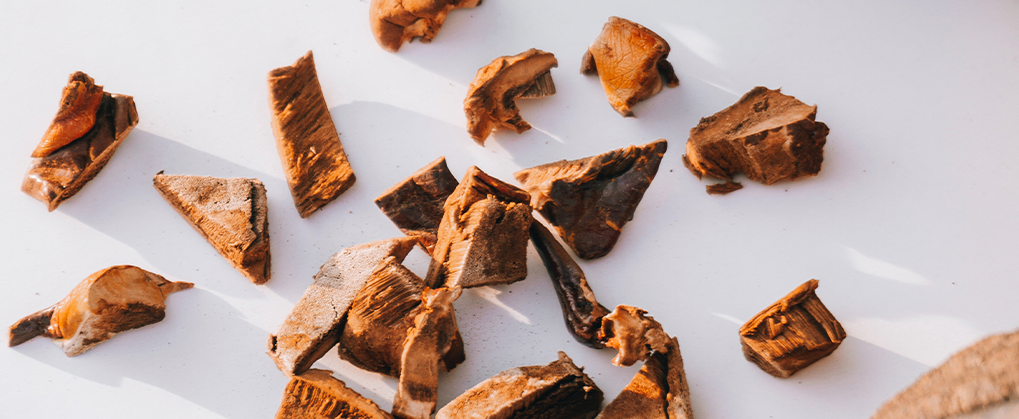
As with almost all medications, side effects may occur with natural remedies such as Reishi mushroom. These do not have to occur with every user, but it is quite possible. Slight Reishi side effects at the beginning of use are normal or part of the Reishi detoxification symptoms and should subside quite quickly. The situation is different for long-term use and especially for people with allergies, especially to food or mushrooms. If such an allergy is known, the intake of Reishi should definitely be medically clarified in advance.
Possible Reishi mushroom side effects are:
- Fatigue
- Flatulence
- Dryness in throat, nose, mouth
- Itching in throat, nose, mouth
- Mild stomach upset
- Acne
- Possibly allergic reactions (be careful with fungal allergies!)
Typical symptoms of long-term use (3 months or more) or overdose are:
- Nosebleeds
- Skin itching
- Dizziness
- Blood in the stool
- Skin rash
Reishi detox symptoms: Wanted side effects
There are certain symptoms of Reishi mushroom that are "wanted" - such side effects that occur during the detoxification process and removal of toxins from the body.
Finally, one of the typical Reishi mushroom side effects is that metabolism, elimination, liver and bile are stimulated. This detoxification process can last for several days and bring corresponding effects.
Typical Reishi detoxification symptoms include:
- Increased perspiration
- Change in the smell of sweat
- Appearance of blemished skin (especially on the face and neck)
- Frequent urination
- Change in color and odor of urine
- Frequent bowel movements, possibly diarrhea
- Flatulence (especially a side effect of Reishi powder)
- Fatigue
- Headache
3 Simple tips to reduce detox symptoms from Reishi:
- Make sure to drink enough (2-4l a day) to help the body detoxify.
- If Reishi detox symptoms are very uncomfortable or too severe, reduce the dose, keep it for a few days and then step by step, slowly increase to the recommended (tolerated) Reishi dosage.
- Since Reishi powder can sedate and make you sleepy, it is recommended to take it in the evening.
Is a Reishi initial aggravation normal?
Users often ask if there is an initial worsening of certain symptoms when taking Reishi.
Some experiences with Reishi actually confirm this. Those who take Reishi mushroom capsules or Reishi powder for the first time may well experience side effects such as mild nausea or stomach pain. However, this is no reason for concern, but completely normal.
After all, it is a natural medicinal mushroom for detoxification. This is a process to which the body must first adjust. In order to flush all the accumulated toxins from the organism, heavy sweating, mild nausea, flatulence and the like may also occur. Above all, frequent visits to the toilet are typical when taking Reishi mushrooms - through urine and stool, as well as through the skin, toxins are transported out of the body.
After the first few days or weeks, these side effects of Reishi mushrooms should subside or be reduced. The organism must get used to the cleansing process.
Reishi side effects: Experiences of users
Reishi extract is more potent than Reishi powder.
One user reports that she uses Reishi capsules due to a pollen allergy. At the beginning of taking them, this caused her to have excessive energy during the day and not be able to rest in the evening. After cutting the dose in half, she no longer has any sleep problems, but recommends using Reishi powder to begin therapy, as this seems to be less potent for her than Reishi extracts in capsules.
Reishi powder supports sleep
Many users appreciate the very deep and sound sleep with the help of Reishi. Also, the vital mushroom has a calming and balancing effect, which is why Reishi powder should be taken in the evening instead of in the morning.
Unusual bowel movements
Frequent bowel movements, diarrhea but sometimes also constipation, seems to be a typical Reishi side effect, but for most users it subsides after a few days. This is a typical detoxification reaction of the body.
Allergic reactions to Reishi
One user experience with Reishi side effects describes a severe itching of the skin as well as a strong burning sensation that occurred after a few hours of the first intake. However, since a drop in blood pressure and severe malaise were also experienced, a strong allergic reaction can be assumed here. However, this reaction occurred only when taking rice powder, but not with extracts in the form of Reishi tablets.
How to prevent Reishi mushroom side effects?
To alleviate side effects from Reishi mushrooms or an initial aggravation from Reishi, we have the following simple tips:
- In case of pre-existing conditions, allergies and taking medication: Reishi intake and dosage should be discussed in advance with treating physicians.
- Reishi capsules and powder can have different effects; therefore, it is important to always follow the intake recommendations of the manufacturer! You can read more about the effects and benefits of reishi here.
- Take "creeping" - that is, start with very low doses of Reishi and wait for the individual reaction of the body - then slowly increase the dose if necessary.
- Detoxification is a typical and hoped-for effect of Reishi. Plenty of fluids helps with this and is also important for transporting toxins out of the body more quickly!
- High purity and quality are important in all natural remedies. Extracts often have a particularly strong effect, here an overdose must be avoided in any case, otherwise Reishi capsules side effects are to be expected. Less is more!
For whom is Reishi not recommended?
As always, natural remedies may not be suitable for everyone. This may be especially the case with allergies (e.g., to fungi or pollen).
Those who take prescription medications should definitely clarify the use of Reishi medically in advance. This is especially known with antihypertensive medications and anticoagulants. It is very important to avoid Reishi side effects or interactions.
Since Reishi has not been adequately studied scientifically in children, pregnant women or during breastfeeding, to be on the safe side, the use of Reishi mushrooms would not be recommended.
Sources:
https://www.vitalpilze.de/aktuelles/hat-der-reishi-nebenwirkungen/105
https://www.naturtest.com/reishi/
https://orthopaedie-innsbruck.at/reishi-mushroom-6893
https://nootriment.com/de/reishi-mushroom-side-effects/
Text author:
Kay Svegler
Communications, PR, American Studies, University of Leipzig
Journalist and freelance writer (e.g. Süddeutsche Zeitung, BILD, MDR etc.)
Former Senior PR Manager for Fischer Appelt, Sustainability and Diversity Manager for DKB

_front%20(1)-min-295x295.png "Reishi 700mg 120 capsules")